
Featuring CPTAC Investigators: Sara Gosline, Ph.D.
- Posted:
Sara Gosline, PhD is a computational biologist at Pacific Northwest National Laboratory (PNNL), where she leads a software and algorithms team. She also serves as computational lead for the PNNL Proteogenomic Translational Research Center (PTRC)—a collaboration between Oregon Health & Science University (OHSU) and PNNL supported by National Cancer Institute’s Clinical Proteomic Tumor Analysis Consortium (CPTAC) and focused on acute myeloid leukemia. Some of her other work includes NF1-related tumors and neurofibromatosis projects.
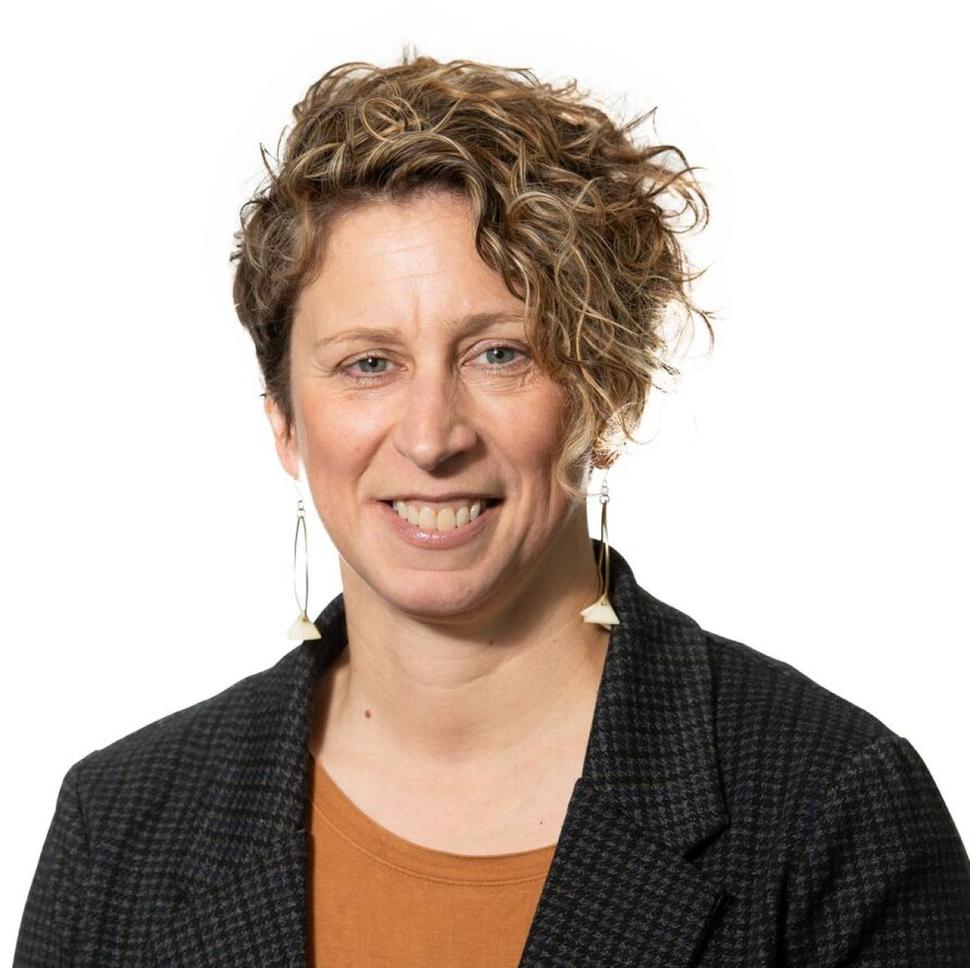
Sara Gosline, Ph.D.
Dr. Gosline describes her path to computational biology as being non-traditional. She originally majored in computer science, taking an interest in operating systems, and databases. After earning her bachelor’s, she worked at Microsoft on their operating system but realized it wasn't the right fit. She returned to academia for a master’s and PhD in computational biology from McGill University.
Her postdoctoral fellowship at MIT's Biological Engineering department focused on integrating multi-omics data—her entry point into cancer research. Dr. Gosline cites the National Cancer Institute’s Integrative Cancer Biology Program, now the Cancer Systems Biology Consortium, as having been foundational to her appreciation of team science.
After her postdoc, Dr. Gosline spent four years at Sage Bionetworks, where she focused on accelerating biomedical research through data coordination and building software tools. There, she realized she wanted to do more directed research and lead projects from her area of expertise, which brought her to PNNL.
Q: What drove your specific interest in cancer research?
Sara Gosline, PhD: The focus on cancer research was originally driven by the fact that that's where all the data was. There's so much data and so many advanced methods that, as a computational biologist, there was always something cutting edge. Someone is always pushing the limit in mathematical modeling or computational algorithms... cancer is a field where people are willing to push the limits in computational research. It goes without saying, I want to cure cancer, too.
Q: What makes the work within the PTRC particularly compelling for you?
SG: I enjoy working with a team. I like helping people solve problems rather than doing it on my own. I like figuring out who needs to be in the room, and how to make sure that they feel appreciated so that they can do their best. Science can't really be done in a vacuum. Because I'm on the computational side, I get to see all the different streams of data and communicate that with the clinicians. So, there's always this 360-degree view of all the data coming in and science being done. It makes it much more fun to solve a problem together than by yourself. The PTRC is great because one of my favorite places to be is alongside clinicians, the people that are making therapeutic decisions. They're very intimately connected with the research and the drugs that we identify as potential treatments. The work that we're doing in the PTRC right now which takes patient samples, sorts them for different tumor subpopulations, and looks at the proteins in each subset of cells is exciting. It's an idea that I was part of the ideation for, which can be both great when things work as expected and disappointing when they do not.
Q: What do you see as the biggest barriers currently facing those in your field?
SG: One of the biggest issues is a lack of computational and experimental literacy. We generate data, throw it over the fence to other people who analyze the data, and they throw it back. But we are all scientists. Everyone [involved] should understand the biology and understand the statistical tests we're doing. We can't have biologists saying, "OK, run that through and tell me what proteins are interesting." It's not a straightforward answer. Training people like computational biologists to be in the wet lab and wet lab biologists to run their analyses is important.
Q: What advice would you give to aspiring scientists or to your younger self?
SG: To study computational biology, it’s first necessary to understand both biology and computation. For me, learning how to code was driven by trying to get to the bottom of a question. Second, develop organizational skills. You have to juggle a lot of things and ideas at the same time. Third, never pass up the opportunity to develop your writing and communication skills. This is what the PhD is really good for, writing a lot and learning how to communicate scientifically. The last thing—don’t be constrained by a single job path. Keep your options open at every step of the way. When I did my postdoc, I didn’t know what I wanted to do. I applied for all different types of jobs and interviewed at pharma companies, universities, and consulting companies. Be very open about the different ways science can be done, and avoid shutting any doors if you can.